Guides / Structure, moisture and wildlife
Loft ventilation and condensation before boarding
Diagnose condensation risk, preserve eaves ventilation and avoid hiding damp beneath a loft storage deck.
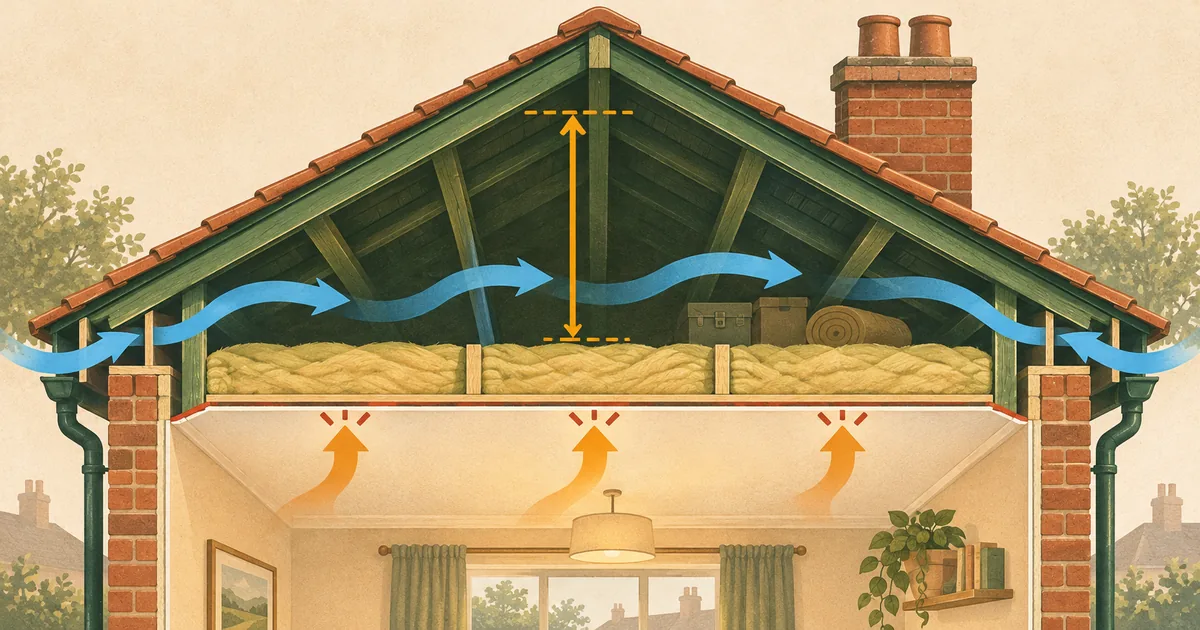
Do not board over an unexplained damp loft. Condensation means moisture is reaching cold surfaces faster than ventilation and the construction can manage it. The solution may involve room extract ventilation, ceiling air leakage, loft ventilation, a roof defect or several of these together.
How a cold loft gets wet
Warm indoor air carries moisture from cooking, bathing, drying clothes and breathing. GOV.UK's existing-home ventilation guide explains that without effective ventilation moisture can be trapped and condense on cold surfaces. Gaps around loft hatches, service penetrations and ceiling fittings can also let warm air leak directly into the roof space.
In winter, nails, underlay and cold timber may be the first surfaces to show droplets. Stored cardboard can absorb moisture and develop mould. Boarding may hide the ceiling surface and restrict inspection without fixing the source.
Preserve the designed airflow
Many cold pitched roofs use ventilation at the eaves, sometimes with additional high-level ventilation. Insulation pushed into the narrowing eaves can block this path. The Planning Portal specifically warns to take care not to block ventilation at the roof edges.
Keep the deck back from the eaves and use suitable insulation retainers or baffles for the roof design. Do not cut or fold the underlay to “make a vent”. If the roof has no obvious vents, ask a competent roofer or retrofit professional to identify the intended arrangement.
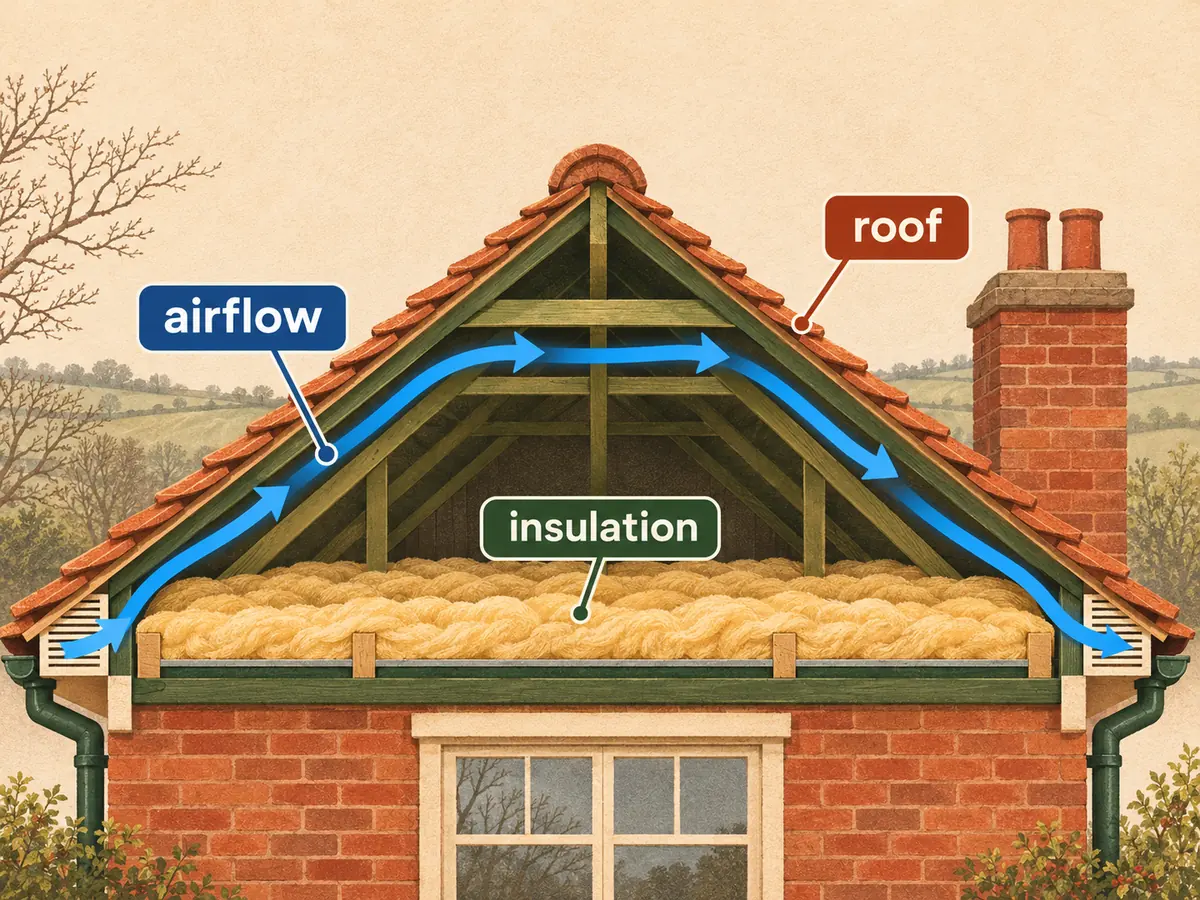
Inspect before boarding
Choose a cold, dry day when possible. Look for droplets, rusty nail tips, staining, mould, wet insulation, soft timber and daylight through roof defects. Check whether bathroom or kitchen ducts end in the loft; extract air should discharge outdoors through a correctly installed terminal.
Inspect the hatch seal and penetrations around pipes and cables. Air sealing must use materials suitable for the substrate and fire requirements. Do not seal intended ventilation openings.
Improve moisture control at source
Use working extract fans in kitchens and bathrooms and follow the fan and ventilation-system instructions. GOV.UK stresses maintaining ventilation when energy-efficiency measures are installed. Blocking background vents to stop draughts can worsen moisture accumulation.
Drying laundry indoors, unvented appliances and high occupancy can increase moisture. Behaviour changes may help but should not be used to excuse a defective fan, leaking duct or roof fault.
Boarding detail
A raised deck should preserve insulation depth and any ventilation space required by the system. LoftZone's certification says ventilation should be maintained in the loft and under the boards to minimise condensation risk. Do not lay an unplanned polythene sheet over mineral wool or wrap stored boxes in a way that traps water against timber.
Leave service inspection points and a route to view vulnerable roof areas. A compact deck in the central headroom zone is easier to monitor than boards packed into every eave.
When to pause
Pause for professional advice if condensation is widespread, timber is mouldy or soft, insulation is wet, the roof has spray foam, the property is listed, or ventilation changes would affect the roof covering. A retrofit assessor, surveyor or competent roofer can distinguish rain ingress from internal moisture and specify the detail.
Do not treat chemical mould cleaner as a structural repair. Surface cleaning may be part of remediation, but the moisture source and material condition need addressing.
After installation
Check the loft after the first prolonged cold weather and after storms. Keep a simple dated photograph of key areas. Smell stored textiles and inspect the underside of boxes. Ensure vents remain clear after wind disturbance or later insulation work.
A small humidity meter can show trends, but a number without outdoor temperature, surface temperature and construction context is not a diagnosis. Visible persistent condensation is enough reason to investigate.
Planning summary
Keep moisture out of the loft through good room ventilation and ceiling air tightness; let the cold roof ventilate as designed; keep insulation continuous without blocking eaves; and retain inspection access. Boarding comes after that sequence, not before it.
Questions for a survey
Ask where outside air is intended to enter and leave, whether the underlay is vapour-open, whether room extract ducts terminate outdoors, and whether staining follows weather or cold indoor conditions. Record which roof slopes are affected and whether water appears on timber, metal fixings or the underlay.
Provide photographs from different seasons and note recent changes such as new insulation, replacement windows, a stronger extractor fan or blocked chimneys. These clues help distinguish rain ingress, air leakage and inadequate ventilation. Do not commission a vent count alone without examining the moisture source and roof construction.
Any remedial specification should say how insulation is retained at the eaves, how the hatch and ceiling penetrations are sealed, and how ventilation remains balanced with the dwelling below. Recheck after the work in similar weather rather than assuming a dry summer inspection proves success.
Do not judge success immediately after warm-weather work. The useful review comes during sustained cold conditions when indoor moisture production is normal. Inspect the same photographed points, including nail tips, north-facing slopes and boxes near eaves. If water returns, remove vulnerable stored items and reopen the investigation. Repeated wiping or adding more vents without diagnosis can conceal the pattern while timber and insulation remain at risk.