Guides / Structure, moisture and wildlife
Loft boarding safety checklist: asbestos, bats and access
Check fragile ceilings, suspect asbestos, bats, lighting, heat and access before starting loft boarding.
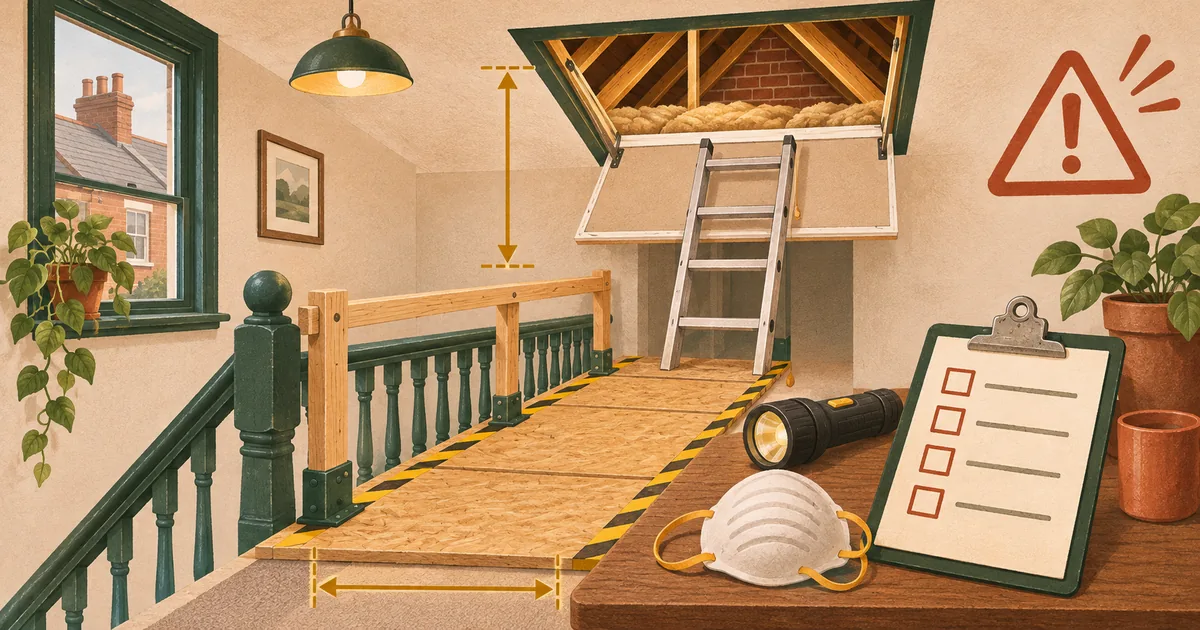
Treat a loft as a confined, fragile work area. The ceiling between joists will not support a person, headroom is restricted and hazards may be hidden by insulation. Stop when the construction, material or wildlife is uncertain.
Before entering
Use a suitable ladder on a stable landing and have another adult nearby. Light the hatch area before climbing fully through. Check temperature; roof spaces can become dangerously hot. Wear clothing and protective equipment appropriate to the insulation and cutting work.
Do not carry large boards while climbing. Plan how materials will pass through the hatch and where their weight will be spread once inside.
Fragile ceiling and temporary boards
Step only on confirmed structural members or suitable crawling boards spanning them. Plasterboard can be hidden under mineral wool, so mark joist lines from a safe position. A misplaced foot can cause serious injury and damage below.
Keep the hatch open area guarded from people below. Remove tools and offcuts at the end of each session. Screws dropped into insulation can remain a later hazard.
Suspect asbestos
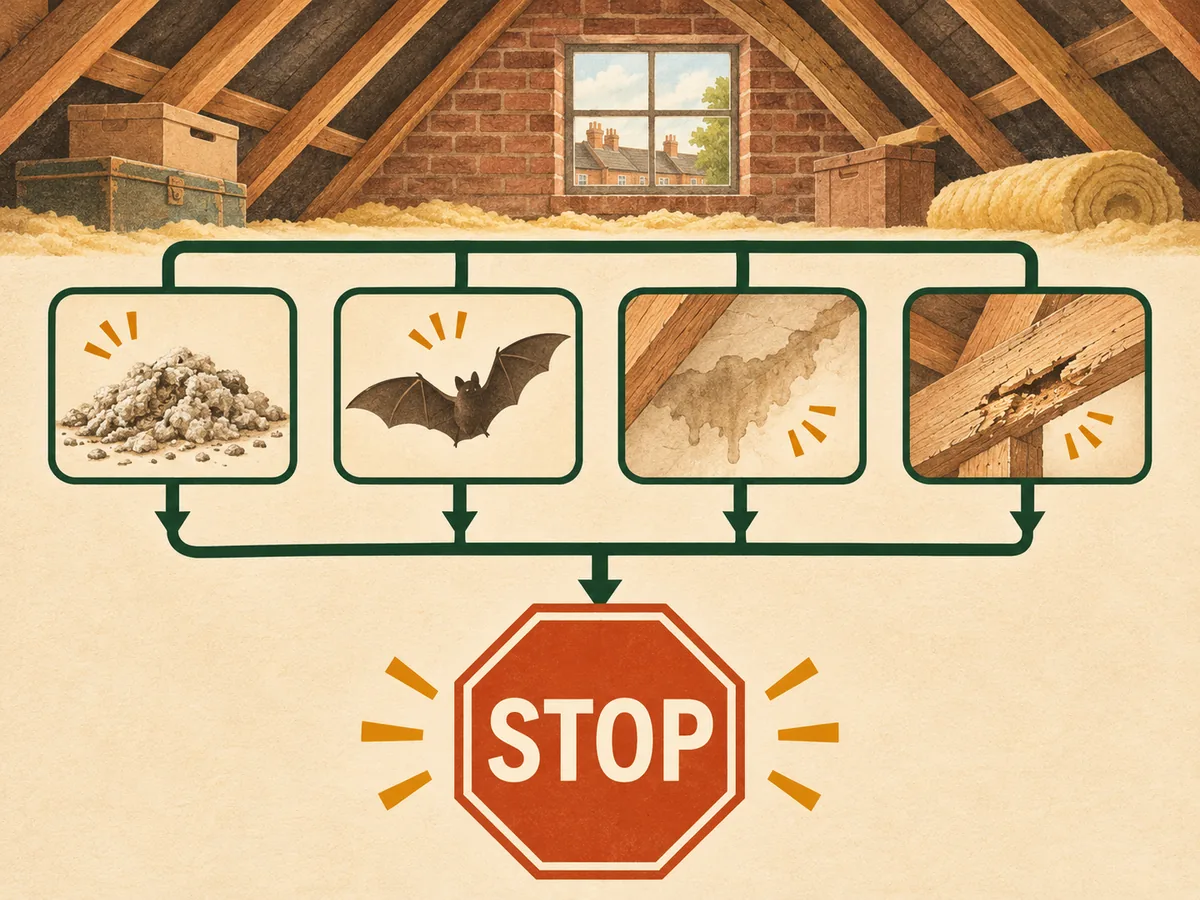
HSE says loose-fill asbestos can be found in loft spaces and must not be worked on except by an HSE-licensed contractor. It describes the material as loose and fluffy, often blue-grey or whitish. Other asbestos-containing materials may occur around tanks, flues, soffits or old panels.
Vermiculite is not automatically asbestos, but HSE's survey guide notes that areas under rockwool or vermiculite insulation should be inspected where other asbestos-containing materials may be present. Do not sample or sweep suspect material yourself. Stop disturbance and use a competent asbestos surveyor.
Bats and roosts
All bats and their roosts are protected. GOV.UK lists insulating a loft and installing lighting as activities that can harm bats. It is an offence to damage or destroy a breeding or resting place or obstruct access.
If you see bats, droppings, feeding remains or a likely roost, stop and contact the Bat Advice Service or the relevant national nature body. Do not block holes or move a bat. Scotland, Wales and Northern Ireland have their own authorities and licensing systems.
Electrical and fire hazards
Identify cables, junction boxes and downlights before covering anything. Electrical Safety First says downlights should not contact or be covered by insulation or combustible material unless specifically designed and rated for it. Burn marks, buzzing, hot fittings or repeated tripping require an electrician.
Use battery tools where practical and manage leads to avoid trips. Do not install a new circuit as an unplanned DIY extra; use a registered electrician and obtain the required certification.
Dust and cutting
Read board and insulation safety data. Cut boards outside with dust extraction when possible. Wear suitable eye and respiratory protection and keep dust out of occupied rooms. Vacuum with appropriate equipment rather than dry sweeping fine dust.
Protect skin when handling mineral wool and wash according to the maker's advice. Bag waste and do not compress it into ventilation openings.
Structure and loading
Never cut truss webs, bracing or joists for access. Stop for split, wet, mouldy, notched or sagging timber. Keep material stacks small and spread across sound supports. The raised floor system does not increase ceiling capacity.
Get structural-engineer advice for heavy storage, large decks, altered roofs or doubtful joists. A storage project is not a loft conversion.
End-of-day check
Count tools, close electrical enclosures, clear the ladder and hatch, remove loose offcuts and verify that vents are open. Do not leave an unfinished board projecting over a void. Close the hatch securely and keep children away from the work area.
On completion, label service access panels and keep a plan of hidden routes. Reinspect in cold weather for condensation and after any roof leak.
Write a stop-work plan
Before starting, agree what will stop the job: an unmarked cable, unstable ladder, excessive heat, suspect material, a bat, wet timber, damaged truss, missing ventilation path or a person working alone. Put the relevant phone numbers and the property address on the plan. This prevents pressure to “finish one more board” when conditions have changed.
Keep first-aid supplies and a charged phone accessible below the hatch, not buried in the loft. Tell another adult when work starts and ends. If access would make rescue difficult, use a competent installer with an appropriate work-at-height and emergency plan.
Protect the rooms below
Clear people and fragile possessions from beneath the work zone. Dust sheets do not make a ceiling capable of catching a person or tool. Avoid hammering and use the specified screws, but remember that drilling can still penetrate hidden services. Isolate and verify circuits when competent work requires it.
After each session, inspect the ceiling below for cracks, screw penetration or staining. A new defect is information to stop and investigate, not something to decorate over.
Make the final walkthrough in daylight and with the permanent light switched on. Check that every tool is removed, every sharp fixing is seated, every temporary board has either become part of the designed floor or left the loft, and no packaging obstructs ventilation. Close and reopen the hatch and ladder once more. Record defects immediately rather than relying on someone to remember them during the next visit.