Guides / Access and lighting
Loft lighting, wiring and Part P
Know when a battery light is enough and when UK loft lighting needs a registered electrician and certification.
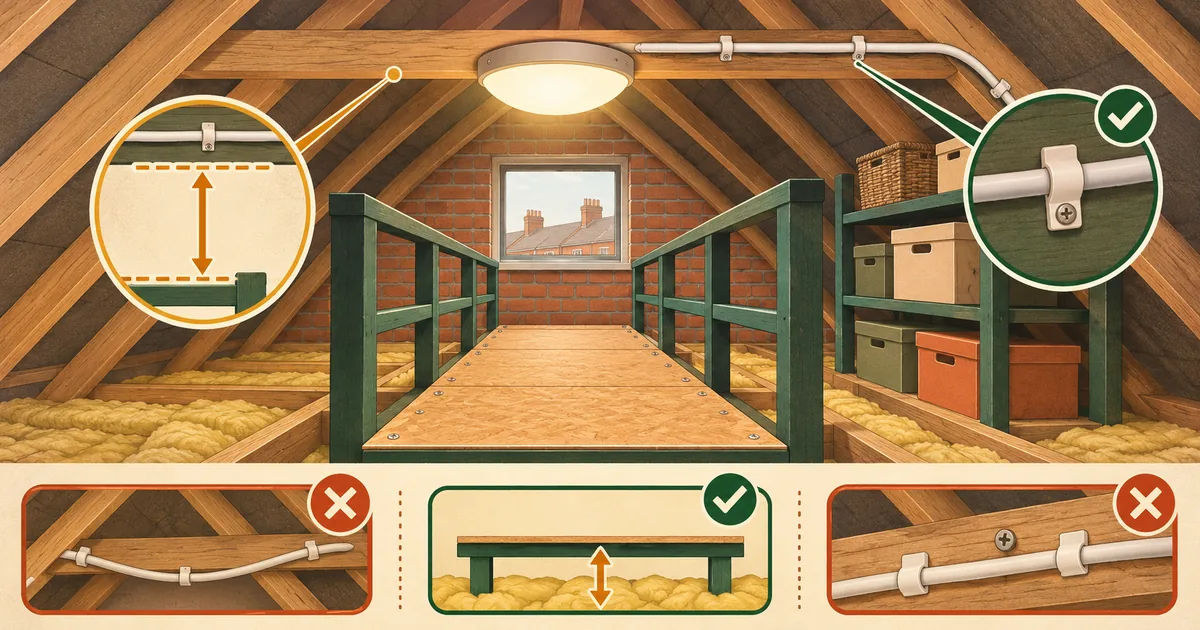
A battery light can improve occasional access without altering the electrical installation. A replacement lamp may use an existing sound holder. New fixed wiring, circuit alterations or an additional circuit need competent design, installation, inspection and testing.
What Part P means
Approved Document P covers electrical safety in dwellings in England. Its aim is protection from fire and injury. Electrical Safety First explains that a new circuit is notifiable work and should be undertaken or reviewed and signed off by a registered competent electrician.
Rules differ across the UK. Scotland uses building standards and Northern Ireland has a different system. Ask a registered electrician what applies at the address and what certificate the work will produce.
Plan before boards
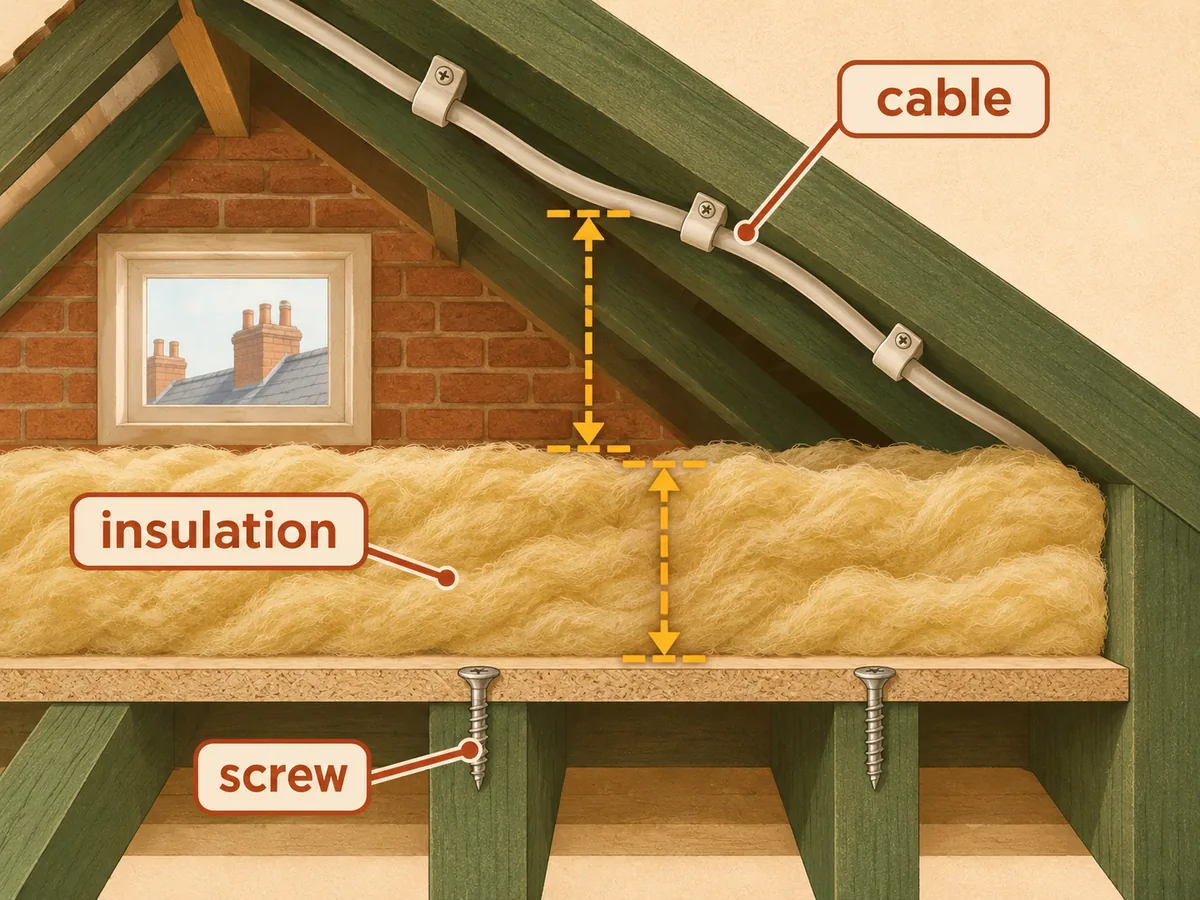
Map the hatch, deck, supports, board screws and existing cable routes. It is easier to position and protect wiring before the raised floor is closed. Keep junction boxes accessible and use only wiring methods suitable for the environment.
Insulation changes cable heat dissipation. Do not bury cables more deeply or surround them without electrical assessment. A circuit that operated previously may need derating or rerouting after insulation is added.
Choose light positions
Put the first control where it can be reached from the ladder. Illuminate the top step, deck edge and full walkway. Add light to service points without creating glare into the climber's eyes. A long loft may need more than one fitting for even coverage.
Do not mount a light where boxes will strike it or where a pull cord can snag. Check the fitting's operating temperature and moisture restrictions. A cold loft can be dusty and can experience temperature extremes.
Existing downlights below
Top-up insulation and boarding affect ceiling downlights. Electrical Safety First says insulation must not cover or contact them unless the fitting is designed and rated for that use. Use the exact fitting instructions and compatible covers; do not create arbitrary holes that destroy the thermal layer.
Scorch marks, brittle cable, damaged holders, buzzing or tripping are stop signs. Switch off safely and call an electrician.
Certificates and records
Ask for the Electrical Installation Certificate or Minor Electrical Installation Works Certificate appropriate to the job, plus Building Regulations compliance documentation where required. Keep it with the loft plan and product manuals.
Photograph routes before boards cover them and mark service zones on removable panels. Future installers should not need to guess where a cable runs.
Battery alternatives
For infrequent storage access, a quality battery pull light near the hatch may avoid fixed work. Check batteries on a schedule and carry an independent torch. Motion lights are convenient but should have reliable detection and not switch off while someone is stationary.
Portable work lights suit temporary installation work only when securely positioned and leads are controlled. They should not become a permanent trailing-cable solution.
Brief an electrician clearly
Give the electrician the deck plan, support positions, insulation depth, hatch location and intended storage route. Explain whether lighting is only for occasional access or for regular service work. Ask them to inspect the existing circuit, protective devices, earthing and cable routes rather than pricing only a visible fitting.
Agree the switching position, number of fittings, light distribution and how cables will remain mechanically protected and accessible. A cable clipped where a board screw will later pass is not a finished design. If junctions sit under removable panels, label the panels without placing stored boxes over them.
Ask how the work will be isolated, tested and documented. The certificate should identify the circuit and extent of the work. Keep it with photographs taken before the floor closes and with the support-system manual. This record reduces guesswork when a later owner adds insulation, solar equipment or another service.
Commissioning checks
Stand at the bottom of the ladder and confirm the control is reachable. From the top step, verify that the landing and deck edge are visible without looking into glare. Walk the full intended route and check shadows behind truss webs. The light should reveal labels and obstacles without encouraging access beyond the boarded zone.
Check that no fitting touches insulation unless rated for it, no transformer or driver is buried contrary to instructions, and no cable is pinched by a rail. Verify switches and pull cords operate freely with the hatch and ladder in every position.
Record the lamp or fitting type and replacement instructions. If an integrated LED fitting fails, a future replacement may be a complete electrical job rather than a bulb change. A simple documented system is often more useful than a highly automated one in a space visited only a few times a year.
Maintenance
Inspect after other loft work because insulation and boxes can be moved against fittings. Keep lenses free of dust using the maker's safe cleaning method and isolate mains equipment before maintenance. Replace leaking batteries promptly and recycle them through an appropriate collection point.
Do not ignore changes: flicker, discolouration, unusual heat, smell, buzzing or circuit trips require isolation and competent investigation. Lighting is a safety aid only while the circuit, fitting and access arrangement remain sound.
The finished lighting plan should be understandable without opening an electrical enclosure. Label the switch, keep the route clear and place replacement information with the certificates. Good documentation does not make electrical work safe by itself, but it prevents later storage or boarding from casually blocking the fitting, cable or isolation point that a competent person needs to inspect.